Physical Address!
Globlar OÜ Harjumaa Tallinn, Estonia!
Physical Address!
Globlar OÜ Harjumaa Tallinn, Estonia!
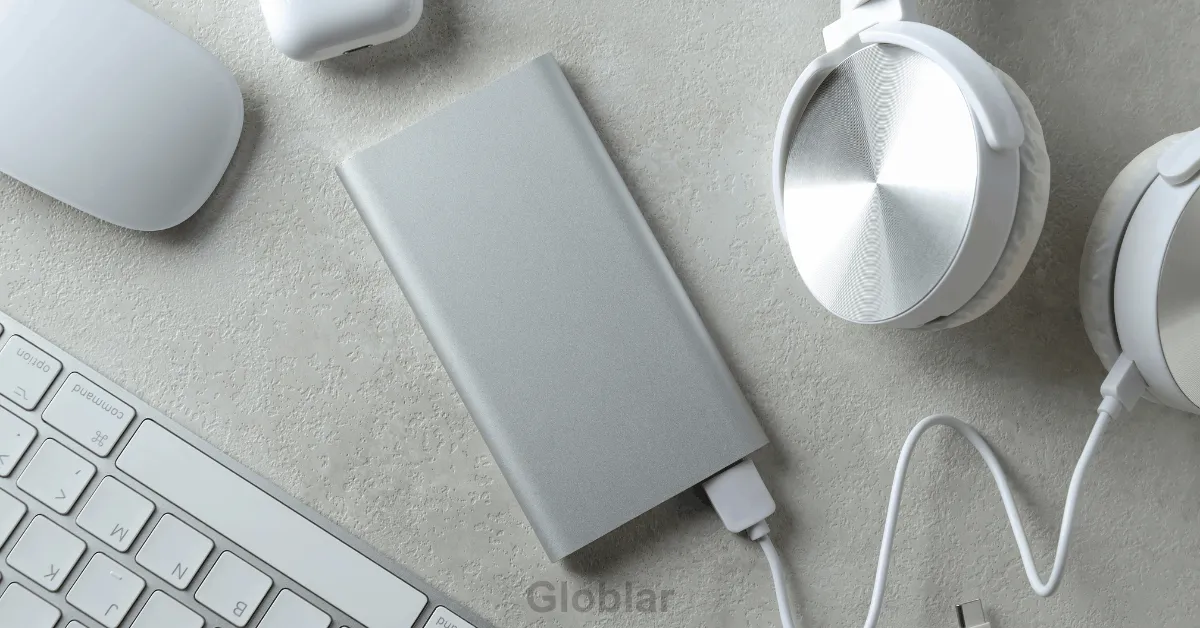
You’re 9 hours into a 14-hour flight. Your phone’s at 6%. Your kid’s tablet died an hour ago. And the guy next to you is hogging the only working outlet on the plane (if your plane even has one).
This is the exact moment a good power bank earns its keep and the exact moment a bad one either dies early or worse gets pulled out of your bag by a TSA agent because you didn’t check the watt-hour rating.
I’ve flown enough long-haul routes to know the difference between a power bank that saves your trip and one that becomes a $40 paperweight at security. Here’s everything you actually need to know before you buy not just specs copy-pasted from a manufacturer’s page.
Quick answer (if you’re in a hurry)
For most long-haul flyers, look for a power bank between 20,000–27,000mAh under 100Wh with USB-C PD fast charging that’s the legal sweet spot that maximizes power without airline hassle.
This is the single most important thing to get right and it’s shocking how many best power bank articles skip it entirely.
The FAA and TSA regulate power banks (and all lithium batteries) by watt-hours (Wh), not mAh:
Power banks are never allowed in checked baggage full stop. They must be in your carry-on.
Most power banks list mAh, not Wh, so here’s the conversion you need:
Power banks typically run at 3.7V internally, so:
💡 Hook tip: Reputable brands print the Wh rating directly on the device (it’s required for airline compliance). If you can’t find it printed anywhere, that’s a red flag skip that brand.
More mAh means more weight and bulk and on a long flight where you’re already carrying a laptop, headphones and snacks, every ounce in your personal item matters. The sweet spot for most travelers is 20,000mAh which typically gives you:
If you’re traveling with a laptop that needs charging too, look at 27,000mAh USB-C PD models that can push 60W+ just double-check the Wh label as shown above.
A power bank that charges slowly is only half the solution if it takes 6 hours to refill itself. It won’t be ready for your next flight leg. Look for:
Traveling with a partner or kids? A single-port power bank becomes a bottleneck fast. Prioritize:
This is where E-E-A-T-style trust matters most a cheap, uncertified power bank is a genuine fire risk in a pressurized cabin. Only buy banks with:
Lithium batteries degrade with charge cycles. If you fly often look for banks rated for 500+ charge cycles at 80% retained capacity cheaper banks often don’t disclose this because it’s unflattering.
On a recent 13-hour transpacific flight, I carried a 20,000mAh USB-C PD bank (74Wh, well under the limit) plus a short 6-inch USB-C cable. That combo:
The lesson: bigger isn’t always better. A 30,000mAh brick that barely clears the airline-approval threshold is a worse travel companion than a compact 20,000mAh bank you’ll actually keep on your person during boarding (when battery anxiety peaks).
| Traveler Type | Recommended Capacity | Key Feature to Prioritize |
|---|---|---|
| Solo flyer, phone-only | 10,000–15,000mAh | Slim/lightweight and fast USB-C PD |
| Long-haul flyer, phone + tablet | 20,000mAh | Dual-port + pass-through charging |
| Business traveler w/ laptop | 25,000–27,000mAh | 60–100W USB-C PD output |
| Family traveling together | 20,000–25,000mAh | Multiple ports and rugged casing |
| Frequent flyer (50+ flights/year) | 20,000mAh | UL 2056 cert + high cycle-life rating |
Can I bring a power bank on a plane in 2026?
Yes — as long as it’s under 100Wh, it goes in your carry-on (never checked luggage), no approval needed.
Will a power bank get flagged at TSA?
Only if the Wh rating isn’t visible/printed or it exceeds 100Wh without documentation. Keep it accessible in case an agent wants to see the label.
Can I charge my power bank in-flight?
Generally no — most airlines prohibit charging power banks from the seatback outlet as a safety precaution, though you can use the outlet to charge your device directly.
What’s the best power bank capacity for international flights?
20,000mAh hits the best balance of charging capacity, weight and staying safely under the 100Wh limit.
The best power bank for a long-haul flight isn’t the one with the biggest number on the box. It’s the one that clears airport security without a second glance, charges fast enough to matter and survives years of gate-to-gate abuse. Get the Wh math right first; everything else is just picking your favorite brand from there.