Physical Address!
Globlar OÜ Harjumaa Tallinn, Estonia!
Physical Address!
Globlar OÜ Harjumaa Tallinn, Estonia!

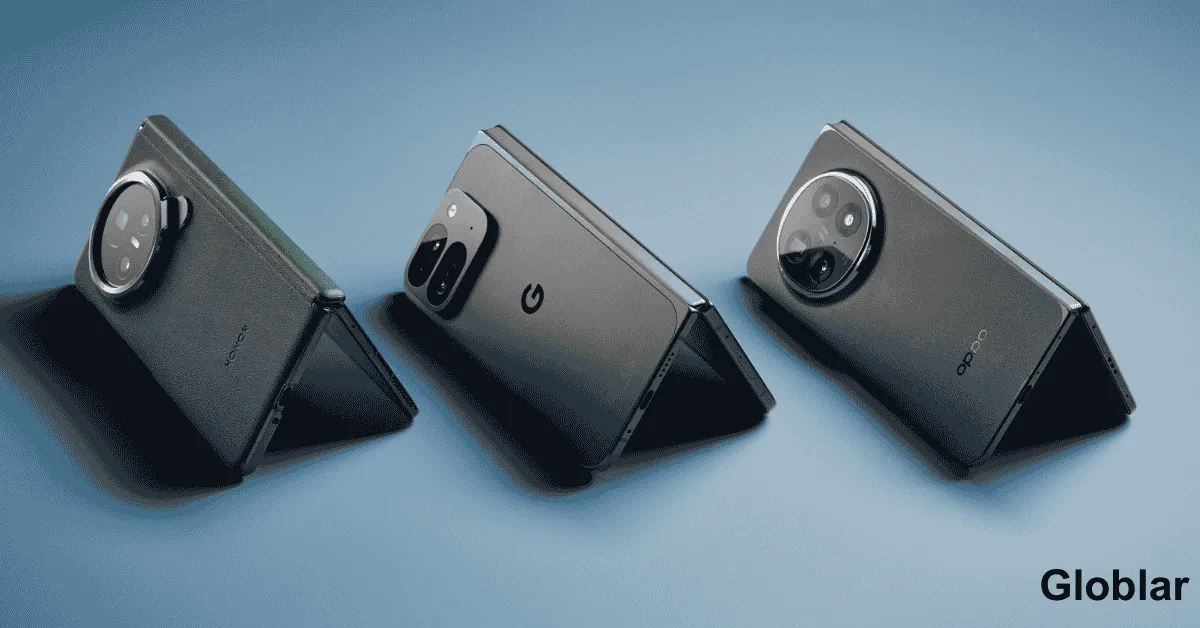
You’re standing in a Best Buy or a Verizon store. Under the glass a foldable phone sits open like a tiny paperback sleek futuristic almost showing off. You pick it up. It feels expensive. It feels like the future.
Then you check the price tag. Then you remember what happened to your cousin’s Galaxy Fold screen after eight months. and then you put it back down and buy the regular flagship instead.
If that scene sounds familiar you’re not alone and you’re not “behind the times” for doing it. In the U.S. foldables still make up only about 1.2% of all smartphones owned even after seven years on the market. That’s not a marketing failure. It’s a rational buying decision millions of people are making over and over again for very specific reasons.
This isn’t another spec-sheet roundup telling you the Galaxy Z Fold 7 has a great camera. This is the honest breakdown of why foldable phones haven’t taken over and whether that’s about to change.
Foldable phones haven’t replaced flagship devices for most everyday U.S. users because of five compounding problems they cost roughly double a flagship they carry higher perceived durability risk they still trail flagships on camera and battery performance app software isn’t fully optimized for their screens and resale value collapses faster than a normal phone’s. None of these are dealbreakers for power users but together they’re enough to keep the average buyer on the sidelines.
Now let’s unpack each one because the “why” matters more than the summary.
Before the reasons the numbers because everything else in this article rests on them:
Growth headlines make foldables sound unstoppable. The ownership numbers tell a much slower more cautious story and that gap is exactly what this article is about.
Here’s the math nobody puts on a billboard. A top-tier foldable book-style phone typically runs $1.8k–$2k while a comparable flagship slab phone iPhone Pro Max, Galaxy S Ultra and Pixel Pro costs $1k–$1.3k. That’s not a small premium. That’s often paying for two phones’ worth of money for one device that does roughly the same job with a bigger hinge.
Manufacturers haven’t reached economies of scale the way traditional phone lines have since foldables use specialized flexible displays custom hinges and lower production volumes all of which keep unit costs high. Budget foldables exist Motorola’s Razr line dips near $700 but the flagship foldable experience the one with the best camera, chip and durability still sits firmly in luxury territory.
Hook to remember: Most people don’t buy phones with their curiosity budget. They buy with their “what if it breaks” budget and that number decides more purchases than any spec sheet.
The first generation of foldables genuinely earned their bad reputation screens creased hinges collected dust and displays failed faster than expected. Manufacturers have made real engineering progress since then titanium hinges IP48 water and dust resistance and noticeably thinner glass that resists visible creasing.
But public memory is stubborn. Once someone sees a viral video of a foldable screen cracking that image sticks regardless of how many product generations have passed since. And the financial risk backs up the anxiety replacing a flexible display or hinge assembly costs significantly more than fixing a normal phone’s screen and no amount of insurance fully removes that what if hovering in a buyer’s mind.
This is a perception problem as much as an engineering problem and perception problems take years longer to fix than hardware ones.
To keep a foldable thin enough to fold at all engineers have to compress the camera module into a fraction of the space a flagship slab phone gets. A phone like the Oppo Find N5 measures just 4.2mm per half when unfolded which physically limits how large a sensor or lens can fit inside.
The result foldable cameras have closed the gap dramatically compared to 2020-era devices but buyers who prioritize photography. A huge segment of the U.S. flagship market still generally get a sharper more consistent camera system in a same-priced non-folding flagship. For a category that markets itself as premium losing on camera quality is a tough sell to a camera-obsessed buyer.
Folding phones have to squeeze a battery around a hinge mechanism and split it across two screen halves which limits total capacity compared to a slab phone of similar thickness. The improvement curve is real some 2026 flip phones now hit around seven hours of consistent screen-on use but flagship slab phones with all-day battery life and fast charging remain the safer bet for someone who doesn’t want to think about their phone dying by 6 p.m.
For everyday users parents commuters and shift workers will this last my whole day without a plan B is a much bigger deciding factor than most spec sheets give it credit for.
This is the reason power users notice and casual shoppers feel without naming it. A lot of everyday apps still don’t scale properly to a foldable’s inner screen. Instead of taking advantage of the extra real estate some apps stretch oddly leave awkward blank space or just run as an oversized phone layout instead of a true tablet-style interface.
Samsung’s One UI has made real strides here split-screen floating windows and desktop-style multitasking via DeX are genuinely useful but that polish is largely limited to Samsung’s own ecosystem. Step outside it and the experience gets inconsistent fast. A device selling itself on “do more with a bigger screen” undercuts its own pitch when half your apps don’t actually use that screen well.
If you’ve ever traded in an old iPhone or Galaxy S and been pleasantly surprised by the offer you already understand why this matters. Foldables depreciate at nearly 63% within six months versus roughly 50% for standard flagships. For a device that costs almost double up front that faster steeper drop makes foldables a much riskier financial decision especially for buyers who upgrade every 1–2 years and expect a decent trade-in credit to offset the next purchase.
This single stat more than any hinge complaint is probably the most under-discussed reason budget-conscious Americans stick with a traditional flagship.
| Factor | Flagship Slab Phone | Foldable Phone |
| Typical Price (US) | $1k–$1.3k | $1.8k–$2k+ |
| Camera Quality | Best-in-class, larger sensors | Good, but space-constrained |
| Battery Life | Reliably all-day | Improving, still trails flagships |
| Durability Perception | Well-trusted after years of use | Improving, but still viewed as riskier |
| App/Software Optimization | Fully mature | Inconsistent outside top ecosystems |
| Resale Value (6 months) | ~50% retained | ~38% retained |
| Unique Advantage | Reliability, value, familiarity | Multitasking screen real estate, tablet-in-your-pocket convenience |
Foldables aren’t a bad product they’re a specialist product wearing a mainstream price tag. They make genuine sense for
If none of those describe your day-to-day phone use a flagship slab phone will almost certainly serve you better for less money and less risk and that’s not a compromise it’s just math.
Here’s the wild card nobody in 2019 saw coming Apple’s long-rumored foldable iPhone is expected to launch in late 2026 with IDC projecting it could capture over 22% of foldable unit share and as much as 34% of the category’s total value in its very first year at a rumored price point around $2.4k.
Analysts widely expect this to be the moment that finally pulls foldables from “niche experiment” toward mainstream awareness. The same way the first iPhone legitimized touchscreen phones industry-wide but even IDC’s own optimistic framing calls it a turning point not an instant tipping point. Expect increased awareness not sudden mass adoption at least through 2027.
Until then the fundamentals in this article price durability perception camera tradeoffs battery life software maturity and resale value remain the real barriers standing between foldables and your back pocket.
Are foldable phones worth buying in 2026? For heavy multitaskers content creators and tech enthusiasts yes the multitasking and screen real estate genuinely improve daily workflow. For the average user prioritizing camera quality battery life and value. A flagship slab phone is still the safer more cost-effective choice.
Why are foldable phones so expensive compared to regular flagships? Foldables use specialized flexible OLED displays custom hinge mechanisms and lower production volumes than standard phones which keeps manufacturing costs and retail prices significantly higher.
Do foldable phones break easily? Modern foldables (2025–2026 generation) are far more durable than early models with titanium hinges and improved water/dust resistance. However repair costs remain higher than standard phones if something does go wrong which keeps durability anxiety alive even as real-world reliability improves.
Will Apple’s foldable iPhone change the market? It’s expected to significantly boost category awareness and could capture over 20% of foldable unit share in its first year but analysts see it as an accelerant for adoption not an instant replacement for flagship phones.
Is a foldable phone better than an iPhone or Galaxy S flagship? Better depends on use case. Foldables win on screen size and multitasking; flagships win on price camera consistency battery life and resale value. Most everyday users are better served by a flagship.
Foldable phones aren’t failing they’re maturing on a slower more deliberate timeline than the marketing suggests. For most everyday Americans the math still doesn’t add up nearly double the price. A durability reputation still being rebuilt camera and battery tradeoffs inconsistent software polish and resale value that falls off fast. None of that means foldables are a bad product it means they’re currently a specialist’s product not a mainstream one.
That could change fast once Apple enters the ring later this year. But until the price gap narrows and the software catches up everywhere not just inside Samsung’s ecosystem. The flagship slab phone will keep winning the everyday user’s wallet and for good reason.
Written By globlar.com | Author: Majid Ishfaq, Digital Marketing & Consumer Tech Analyst!

Comments are closed.






[…] Samsung Galaxy, OnePlus and Xiaomi and Oppo phones plus Snapdragon-powered Windows laptops Meta Ray-Ban glasses and smartwatches launching after […]